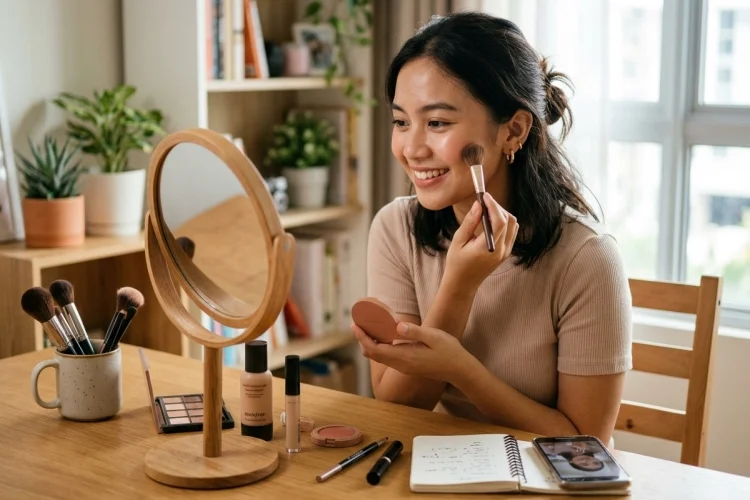
Learning makeup for the first time can feel surprisingly overwhelming.
Walk into a beauty store or scroll through social media and you will see dozens of foundations, concealers, primers, brushes, powders, palettes, and techniques that seem to require professional-level skills.
The good news is that you do not need a huge makeup collection or complicated routine to get started. If you want to know how to start learning makeup as a complete beginner, the best approach is actually to keep things simple.
Learn what a few basic products do, practice one technique at a time, and gradually discover what works for your face, skin type, and personal style.
Makeup is not about following one strict set of rules. It can be used to highlight features, create different looks, or simply make getting ready more enjoyable.
Whether you want a natural everyday makeup routine or eventually hope to master glamorous looks, building strong basics first will make everything else much easier.
1. Start by Understanding What Makeup Actually Does
Before buying products, it helps to understand the basic purpose of different types of makeup.
Foundation and skin tints help create a more even-looking complexion. Concealer can provide additional coverage around areas such as under the eyes or over blemishes. Blush adds color back to the cheeks, while bronzer can add warmth and dimension.
Eye products serve different purposes too. Mascara makes lashes appear more defined, eyeliner emphasizes the eyes, and eyeshadow can add color, depth, or contrast. Lip products range from subtle tinted balms to highly pigmented lipstick.
You do not need every category.
For your first beginner makeup routine, think about what you actually want to achieve. Someone who simply wants to look a little more polished might only need concealer, brow gel, mascara, blush, and lip balm.
Understanding the function of each product prevents one of the most common beginner mistakes: buying makeup simply because it is popular.
2. Prepare Your Skin Before Applying Makeup
Good makeup application often starts before makeup touches your face.
A simple skincare routine can help create a smoother surface. Cleanse your face gently, apply moisturizer suitable for your skin type, and allow it to absorb before starting your makeup.
During the daytime, sunscreen should also be part of your routine. The American Academy of Dermatology recommends choosing a broad-spectrum, water-resistant sunscreen with SPF 30 or higher.
Do not worry about building a complicated ten-step skincare routine just because you are learning makeup. Clean, moisturized, protected skin is already a great foundation.
If you are trying a new skincare or cosmetic product and have sensitive skin, testing it on a small area first can also be sensible. Dermatologists note that ingredients in cosmetics can occasionally trigger irritation or allergic contact dermatitis.
3. Build a Small Beginner Makeup Kit
One of the easiest ways to learn makeup is to start with fewer products.
Instead of purchasing twenty different items, create a simple starter makeup kit containing products you can realistically practice with.
A practical beginner collection might include:
- Tinted moisturizer or lightweight foundation
- Concealer
- Brow pencil or brow gel
- Mascara
- Blush
- Neutral eyeshadow
- Lip balm, lip tint, or lipstick
You can always add bronzer, highlighter, eyeliner, setting powder, or more colorful eyeshadow later.
When choosing foundation or concealer, pay particular attention to shade and undertone. Your skin may lean warm, cool, neutral, or somewhere in between.
Testing shades around your jawline can often give you a better idea of how naturally a complexion product blends with your face and neck.
The goal at this stage is not to own everything. It is to learn how your products behave.
4. Learn a Simple Makeup Order First
There is no universal rule saying makeup must always be applied in exactly the same order. However, having a basic sequence makes practice easier.
You could begin with moisturizer and sunscreen, followed by your complexion product. Apply a light layer of foundation or skin tint rather than trying to create full coverage immediately.
Next, place small amounts of concealer wherever you want extra coverage and blend gently.
Then move to your eyebrows, followed by simple eye makeup such as neutral eyeshadow and mascara. Finish with blush and your chosen lip product.
As you become more comfortable, you can experiment with different approaches. Some people prefer doing eye makeup before foundation, particularly when using darker eyeshadow that might fall onto the cheeks.
Think of your beginner routine as a starting framework rather than a strict rulebook.
5. Focus on Blending Instead of Using More Product
A surprisingly important beginner makeup tip is simple: start with less product.
It is much easier to add another thin layer than to remove excess foundation, blush, bronzer, or eyeshadow.
For complexion products, begin around the center of your face and blend outward. You can use clean fingers, a makeup sponge, or a brush depending on the product and the finish you prefer.
With blush, apply a small amount first and slowly build the color. The same principle works with eyeshadow.
Beginners sometimes assume professional-looking makeup requires lots of makeup. In reality, careful placement and smooth blending usually matter more than quantity.
Practice watching how the product changes as you blend it. Learning when to stop blending is part of developing your makeup skills.
Natural-looking results often come from several subtle adjustments rather than one heavy application.
6. Practice One Makeup Skill at a Time
Trying to learn foundation, eyeliner, contouring, false lashes, eyeshadow blending, brows, and lipstick simultaneously can become frustrating quickly.
Instead, choose one or two techniques to practice.
For example, spend several days learning how much foundation gives you the finish you like. Once that feels comfortable, practice shaping your brows. Later, experiment with mascara or a simple two-color eyeshadow look.
Eyeliner is a great example of a skill that usually improves through repetition. Your first lines may not match perfectly, and that is completely normal. Even experienced makeup users often adjust their eyeliner several times.
Taking photos of your makeup in natural light can also be helpful. You may notice things in a picture that are harder to see while standing close to a mirror.
Makeup is a practical skill. Watching tutorials helps, but improvement mostly happens when you actually practice.
7. Keep Your Makeup and Tools Clean
Learning makeup technique is important, but makeup hygiene matters too.
Brushes and sponges regularly come into contact with your skin, oils, and cosmetic products.
The American Academy of Dermatology suggests washing makeup brushes every seven to ten days, while Cleveland Clinic also emphasizes cleaning tools regularly to reduce the transfer of harmful bacteria.
Avoid sharing eye products such as mascara or eyeliner. The U.S. Food and Drug Administration specifically warns against sharing eye cosmetics because another person’s germs may contaminate the product.
Pay attention to how your skin and eyes react as well. If a product causes significant redness, itching, swelling, or persistent irritation, stop using it.
Cosmetics can cause allergic reactions in some people, including itchy or red skin.
Good hygiene is not the glamorous part of makeup, but it is one of the habits worth learning from the beginning.
8. Develop Your Own Makeup Style
Once you understand basic makeup techniques, experimentation becomes much more fun.
You might discover that you love lightweight, natural makeup and rarely use foundation. Maybe you prefer bold lipstick with almost no eye makeup. Or perhaps colorful eyeshadow eventually becomes your favorite part of your routine.
Try recreating simple looks you see online, but do not feel pressured to copy every beauty trend.
Face shapes, eye shapes, skin textures, undertones, lifestyles, and personal preferences are different. A technique that looks fantastic on one person might not give you the same result, and that does not mean you are doing something wrong.
Use tutorials as inspiration rather than rigid instructions.
The more you practice, the easier it becomes to recognize which products, shades, tools, and techniques make you feel comfortable. That personal understanding is ultimately more valuable than memorizing dozens of beauty rules.
Learning makeup does not require expensive products, professional tools, or perfect technique from day one.
The easiest way to understand how to start learning makeup as a complete beginner is to begin with a small collection, prepare your skin properly, use light amounts of product, and master one skill at a time.
Keep your tools clean, pay attention to how your skin responds, and give yourself permission to experiment. Some looks will work beautifully, while others may become useful practice sessions-and both are valuable.
Start with a simple everyday makeup routine this week and practice it several times rather than constantly changing products.
Once those basics begin to feel natural, gradually add new techniques such as eyeliner, bronzer, highlighter, or more advanced eyeshadow. Makeup becomes much easier when you learn it step by step.