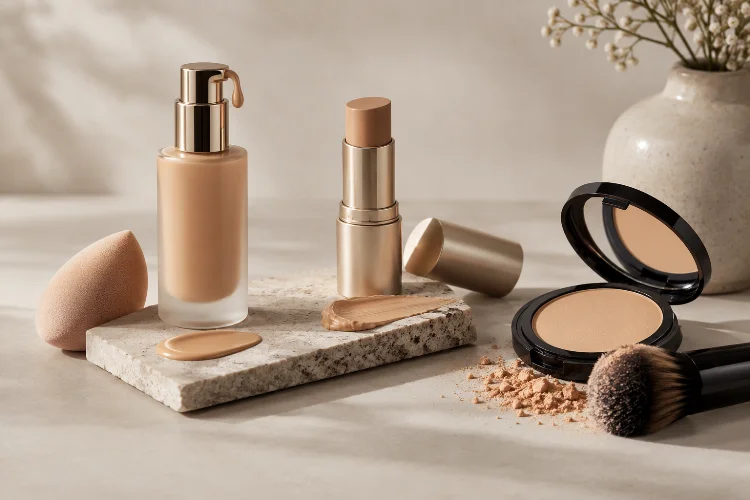
Choosing foundation should be simple. You find your shade, apply it to your face, blend, and move on with your day.
Then you walk into the makeup section and discover liquid foundations, cream compacts, powder formulas, serum foundations, sticks, matte finishes, dewy finishes, and dozens of coverage options.
Suddenly, buying foundation feels like a small research project.
The good news is that most products become much easier to understand once you know the major foundation formats. While formulas vary between brands, three of the most familiar options are liquid, cream, and powder foundation.
This guide offers liquid, cream, and powder foundation types explained in beginner-friendly language.
We will look at how each one feels, how much coverage it can provide, the finishes you may see, which skin types might prefer it, and how to apply it without making your makeup unnecessarily complicated.
There is no universally “best” foundation. The right one is simply the formula that works best with your skin, lifestyle, and preferred makeup style.
1. What Does Foundation Actually Do?
Foundation is a complexion product designed primarily to make skin tone appear more even. Depending on the formula, it can also reduce the visible appearance of redness, discoloration, blemishes, and uneven texture.
Coverage can range from extremely sheer to full. A sheer foundation allows much of your natural skin to remain visible, while full-coverage formulas contain more pigment and can hide significantly more variation in complexion.
Finish is another important factor.
Matte foundations reduce the appearance of shine, while dewy or luminous formulas create a more reflective appearance. Natural or satin finishes usually sit somewhere between those two extremes.
The FDA classifies foundation and face powder as cosmetics in the United States. Cosmetic products are expected to be safe when used according to their labeling or normal conditions of use.
Understanding these basic differences makes comparing foundation types much easier.
2. What Is Liquid Foundation?
Liquid foundation is probably the format most beginners immediately picture when they hear the word “foundation.”
It usually comes in a bottle, tube, or pump container and has a fluid consistency. However, the texture can range from very watery serum-like formulas to thicker liquids that feel almost creamy.
One major advantage is versatility.
Liquid foundation can be available in sheer, medium, or full coverage, and manufacturers offer everything from strongly matte finishes to very luminous ones. Some formulas are designed to be layered so you can start lightly and gradually increase coverage.
Who Is Liquid Foundation Best For?
Liquid foundation can potentially work for almost every skin type because there are so many formulas available.
Someone with dry skin might prefer a hydrating or luminous liquid, while a person with oily skin may look for an oil-free or matte formula. The formula matters more than simply seeing the word “liquid” on the bottle.
Maybelline, for example, describes modern liquid formulas as offering adjustable coverage and multiple finish options, showing how broad this category has become.
Application is also flexible. You can use clean fingers for light coverage, a damp sponge for a softer finish, or a brush when you want more controlled coverage.
The key is starting with a small amount. Putting on too much immediately can make even an excellent formula look heavy or cakey.
3. What Is Cream Foundation?
Cream foundation has a thicker and richer consistency than most liquid formulas. It may come in a compact, pot, palette, tube, or stick-like format.
Because of its texture, cream foundation is often associated with medium-to-full coverage. It can be particularly useful when you want stronger coverage in specific areas without applying several layers of thin liquid foundation.
Cream formulas can also provide a smooth, polished appearance in photography or special-event makeup.
However, richer does not automatically mean better.
Applying too much cream foundation can sometimes create a heavy appearance, especially around areas where the face naturally moves, such as beside the mouth or underneath the eyes.
For everyday use, try applying a thin layer first and adding more only where you actually need it.
Who Might Prefer Cream Foundation?
Normal and dry skin types often enjoy creamy formulas because they can feel more comfortable than very dry powders. Some mature skin users also prefer flexible cream textures, although the ideal formula depends heavily on individual skin condition and product ingredients.
People with oily skin can still use cream products, but they may need to experiment with lighter formulas or strategically set certain areas with powder.
Blending is important. A dense brush or damp beauty sponge can help spread a small amount across a larger area instead of leaving thick patches.
And remember: high coverage does not mean your entire face needs the same amount. Use more only where needed.
4. What Is Powder Foundation?
Powder foundation combines pigment and powder into a product designed to provide more complexion coverage than ordinary setting powder.
It often comes in a pressed compact, although loose powder versions also exist.
Compared with traditional liquid foundation, powder tends to feel lightweight and is easy to apply quickly. It is also extremely convenient for carrying in a bag because you do not have to worry about a bottle leaking.
Powder foundation commonly produces a natural-to-matte finish and can help reduce the appearance of surface shine. Some formulas offer surprisingly buildable coverage as well.
You can apply it lightly with a fluffy brush for softer coverage or use a denser brush or sponge when you want greater opacity.
Who Might Prefer Powder Foundation?
People with oily or combination skin often enjoy powder because of its less emollient texture and matte appearance.
It can also be useful for quick everyday makeup. If you only have five minutes before leaving home, applying powder foundation, brow gel, mascara, blush, and lip balm can create a simple polished look surprisingly fast.
Dry skin requires more careful preparation because powder can sometimes make flakes or dry patches more noticable.
Moisturizing before application and using a smaller amount usually helps.
5. Liquid vs. Cream vs. Powder: What Is the Real Difference?
The most noticeable difference is texture, but that difference affects almost everything else.
Liquid foundation spreads easily across the skin and offers one of the widest ranges of coverage and finishes.
Cream foundation is typically denser, making it useful when you want richer texture or more concentrated coverage. Powder foundation is dry, portable, and often associated with quick application and matte or natural-looking finishes.
Coverage is not completely determined by format, however.
A modern liquid foundation can provide more coverage than some creams, while a high-pigment powder may outperform a very sheer liquid. Always check how the individual product describes its coverage.
The same applies to skin type. There is no rule saying someone with oily skin can never use cream or someone with dry skin cannot wear powder.
Formula matters.
6. Choose Foundation Based on Your Skin Type
Knowing your general skin behavior can narrow the search.
If your skin feels tight, rough, or flaky, you may prefer a moisturizing liquid or creamy foundation. Skin preparation becomes especially important because makeup tends to emphasize dryness when applied over dehydrated patches.
If you become shiny quickly, a lightweight matte liquid or powder foundation might feel more comfortable.
Combination skin can require a mixed approach. You might use liquid foundation across the face and add powder only through the oily forehead, nose, and chin instead of powdering everything.
Acne-prone skin deserves extra attention to product selection. The American Academy of Dermatology advises looking for makeup labeled oil-free, non-comedogenic, or won’t clog pores when breakouts are a concern.
Your skin can change with weather, skincare, hormones, and age too. A foundation you loved several years ago may not remain your prefered formula forever.
7. Think About Coverage and Finish, Not Just Formula
Two liquid foundations can look completely different on the same person.
One might be sheer and glowing, while the other is matte and highly pigmented. That is why shopping only by foundation type is not enough.
Ask yourself three questions: How much coverage do I want? What finish do I like? How long do I need the makeup to last?
For casual daytime makeup, you might enjoy light coverage with a natural finish. For an event, photography, or an evening out, medium or full coverage may suit your needs better.
Do not assume full coverage always looks more professional. Carefully applied light coverage can look extremely polished because it allows natural skin texture to remain visible.
The best result often comes from using enough foundation to even the complexion – not enough to completely hide every detail of your skin.
8. Application Tools Can Change the Result
Foundation does not look the same with every application method.
Using your fingers can warm liquid or cream foundation slightly and create a skin-like finish. Just make sure your hands are clean before touching your face.
A damp makeup sponge tends to absorb some excess product and can produce softer coverage. Brushes generally retain more product and may offer greater control.
Powder foundation usually works best with brushes or appropriate powder sponges.
Whatever tool you choose, keep it clean. The American Academy of Dermatology warns against sharing makeup and applicators because oil, dead skin cells, and microorganisms can transfer between people.
Foundation also does not last forever. Cleveland Clinic notes that changes in smell, texture, color, or performance can indicate that a cosmetic product should be discarded.
So if that old bottle has been hiding in your drawer for years and suddenly smells wierd, replacing it is probably a better idea than trying to rescue it.
9. Which Foundation Type Should a Beginner Choose?
For many beginners, liquid foundation is a comfortable starting point because it is easy to find and usually simple to blend.
But that does not make it the automatic winner.
If you dislike the sensation of liquid makeup or want something extremely fast, powder could suit you better. If you like richer formulas and need stronger coverage, cream might make more sense.
When possible, test a foundation before buying it. Look at it in natural light and give it some time to settle rather than judging the shade immediately after application.
Also pay attention to how your skin feels after several hours.
The best foundation is not necessarily the one that creates the most dramatic before-and-after transformation. It is the one you can apply comfortably, blend consistently, and wear without constantly thinking about it.
Understanding liquid, cream, and powder foundation types makes shopping for complexion makeup much less confusing.
Liquid foundation offers exceptional variety and flexible coverage. Cream foundation provides a richer texture and can work well when stronger coverage is desired. Powder foundation is practical, portable, and often ideal for quick application or a more matte appearance.
Rather than choosing based on trends, consider your skin type, preferred finish, desired coverage, and the amount of time you normally spend doing makeup.
Start with a small amount, experiment with different application tools, and watch how the formula performs throughout the day.
Once you understand what your skin actually likes, choosing foundation becomes much easier – and your makeup routine becomes faster, simpler, and more enjoyable.