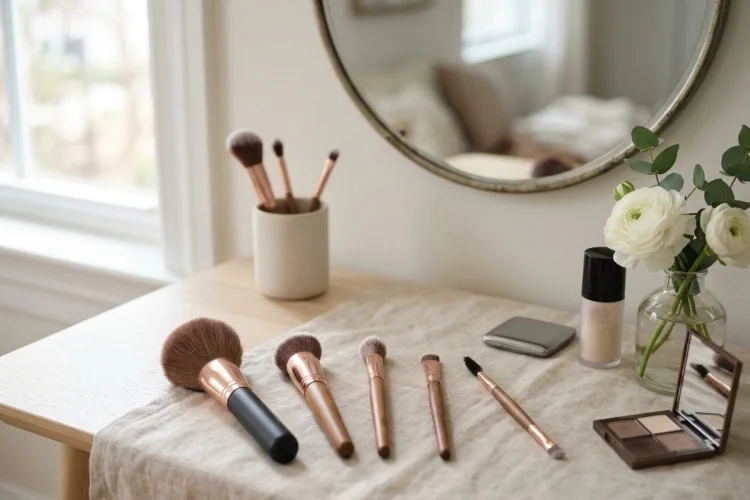
Walking into the makeup brush section of a beauty store can be confusing when you are just getting started.
There are huge powder brushes, tiny detail brushes, angled brushes, flat brushes, fluffy brushes, and plenty of tools that seem to do almost the same thing.
The truth is much simpler: beginners do not need twenty different brushes to create a great everyday makeup look. A small collection of versatile tools can handle foundation, powder, blush, eyeshadow, brows, and many other basic techniques.
Knowing the essential makeup brushes every beginner should own can also save you money. Instead of buying a large set filled with tools you may never use, you can focus on brushes that actually make application easier.
In this beginner makeup brush guide, we will look at the most useful brushes, explain what each one does, and share practical tips for choosing, using, and cleaning them.
Once you understand the basics, building your own makeup brush collection becomes much less intimidating.
1. Foundation Brush: Your Base Makeup Essential
A foundation brush is one of the most useful tools if you regularly wear liquid or cream foundation.
There are several shapes available, but beginners often find a dense buffing brush particularly easy to control. Its tightly packed bristles help distribute foundation while allowing you to blend the product into the skin using gentle circular or tapping motions.
Buffing brushes can work with liquid, cream, and even some powder formulas. This versatility makes them especially practical when you are building a small makeup kit.
How to Use a Foundation Brush
Start by placing a small amount of foundation on the back of your hand or directly onto several areas of your face.
Use the brush to blend from the center of your face outward. Avoid immediately applying a thick layer. Building thin layers usually gives you more control over coverage and helps prevent makeup from looking heavy.
If you prefer very light coverage, you may even find that clean fingers or a makeup sponge work well. A foundation brush is useful, but makeup tools should always match the products and finish you personally prefer.
2. Large Powder Brush for Setting Your Makeup
A large, fluffy powder brush is another excellent addition to a beginner makeup kit.
This brush is normally designed to distribute loose or pressed powder across a larger area of the face. Its soft bristles allow you to apply a thin layer instead of packing too much powder onto the skin.
To use one, gently dip or swirl the brush into your powder, then tap away the excess before applying it.
Lightly sweep or press the powder over areas where you want to reduce shine or set your foundation. NYX notes that fluffy powder brushes are designed to help distribute powder evenly across the face.
A good powder brush can also become a multitasking tool. Depending on its size and shape, you may be able to use it for bronzer or other powder products.
That versatility is useful when you are trying to keep your beginner brush collection small.
3. Blush Brush for Natural-Looking Color
Blush can instantly make a complexion look more lively, but the right brush can make application much easier.
A typical blush brush is smaller than a large powder brush and usually has soft, fluffy bristles. Some versions are slightly tapered or angled, which helps you control where the color goes.
Pick up a small amount of blush and tap away excess product before applying it to your cheeks. Begin lightly because blush is much easier to build than remove.
The exact placement depends on the effect you want. Applying blush mainly to the apples of the cheeks can create a softer look, while placing it slightly higher along the cheekbones can produce a lifted appearance.
Do not worry too much about following strict face-shape rules when you are starting out. Experiment with different placements and see what looks natural to you.
4. Flat Eyeshadow Brush for Applying Color
If you want to experiment with eye makeup, a flat eyeshadow brush is one of the first eye brushes worth buying.
Unlike a fluffy blending brush, a flat shadow brush usually has more densely packed bristles. This allows it to pick up and place eyeshadow directly onto the eyelid with better concentration.
NYX, for example, describes flat shadow brushes as useful for packing on eyeshadow and creating stronger color payoff.
For a simple beginner eye look, pick up a neutral eyeshadow and gently press it across your eyelid rather than aggressively sweeping the brush back and forth.
You can use lighter colors for subtle everyday makeup or experiment with deeper and brighter shades as your confidence grows.
If you only wear very simple eye makeup, one flat shadow brush and one blending brush may be all you need.
5. Fluffy Blending Brush for Softer Eyeshadow
If there is one eye makeup tool that can dramatically improve how your eyeshadow looks, it is a blending brush.
A blending brush typically has soft, flexible bristles with a rounded or tapered shape. Instead of packing color onto one spot, it helps diffuse the edges of eyeshadow so different shades transition more smoothly.
Both e.l.f. Cosmetics and NYX describe blending brushes as useful for softening harsh lines and creating diffused eyeshadow looks.
Try using small circular motions or gentle windshield-wiper movements through the crease of your eyelid. Use very little pressure and gradually blend until obvious edges become softer.
One useful beginner technique is to apply one neutral shade across the lid with a flat brush, then take a slightly deeper color through the crease with your blending brush.
It is simple, but it teaches two important makeup skills: product placement and blending.
6. Angled Brush and Spoolie for Brows
Brows can frame the face, and you do not need several tools to shape them.
A dual-ended eyebrow brush is especially practical for beginners because it often combines a small angled brush on one end and a spoolie on the other.
The angled side can be used with brow powder, pomade, or some gel formulas. Its narrow shape allows you to create controlled strokes instead of filling the entire brow with one heavy block of color.
The spoolie resembles a clean mascara wand and is used to comb brow hairs into position. It can also blend brow product after application, helping soften harsh lines.
For a natural effect, brush the brows first, fill only the areas that need more definition, and then run the spoolie through them again.
This type of two-in-one brush is particularly valuable when you are building a compact makeup collection.
7. Concealer Brush: Useful but Not Always Essential
A small concealer brush can be helpful for applying product precisely around blemishes, discoloration, or other areas where you want extra coverage.
These brushes are often flat with firm synthetic bristles. Their shape gives you more control than a large complexion brush, especially when you are trying to cover a small spot.
However, this is one brush that some beginners may choose to skip initially.
Many people successfully blend concealer with their fingers, a makeup sponge, or the same complexion brush they use for foundation. If your budget is limited, focus first on brushes that cannot easily be replaced by other tools.
As your makeup skills develop, you can decide whether a dedicated concealer brush would make your routine easier.
8. You Do Not Need a Huge Brush Collection
One of the biggest misconceptions about learning makeup is that you need a professional-sized brush set.
You really do not.
For a straightforward beginner makeup routine, five or six brushes can cover most everyday needs: a foundation brush, powder brush, blush brush, flat eyeshadow brush, blending brush, and angled brow brush.
You can gradually add specialized tools such as contour brushes, highlighter brushes, eyeliner brushes, detail brushes, or fan brushes when you actually need them.
Multitasking brushes are especially valuable. Some modern brushes are specifically designed to handle several formulas and functions, such as foundation, blush, bronzer, and contour.
Your goal should be usefulness, not quantity.
9. How to Choose Good Makeup Brushes
Price alone does not determine whether a brush will work well.
Look for bristles that feel comfortable against your skin and do not shed excessively during normal use. The brush head should feel secure rather than loose where it connects to the handle.
Synthetic makeup brushes are widely available today and can work with powders, creams, and liquids. They are also common among affordable beginner-friendly brush collections.
Pay attention to size as well. A very large eyeshadow blending brush may be difficult to control if you have limited eyelid space, while an extremely small face brush may make foundation application unnecessarily slow.
Comfort matters too. The best beginner makeup brushes are ultimately the ones you can control easily.
Instead of immediately purchasing an expensive twenty-piece brush kit, try buying a few essential tools first. After several weeks of practicing, you will have a much better idea of what your routine is missing.
10. Keep Your Makeup Brushes Clean
Learning how to clean makeup brushes is just as important as learning how to use them.
Brushes repeatedly come into contact with makeup, skin oils, dirt, and other residue. The American Academy of Dermatology warns that dirty brushes can contribute to breakouts, rashes, and infections and recommends cleaning makeup brushes every seven to ten days.
To clean them, rinse the bristle tips with lukewarm water and use a gentle cleanser or shampoo. Massage carefully, rinse until the water runs clear, remove excess moisture, and lay the brushes flat to dry.
Avoid leaving wet brushes standing upright because water can travel down toward the area where the bristles and handle are attached.
Eye makeup tools deserve particular attention. The FDA recommends keeping any instruments used around the eyes clean and avoiding shared eye cosmetics because contamination can increase the risk of infection.
Clean tools do not just help protect your skin. They can also prevent old product buildup from interfering with your makeup application.
Choosing the essential makeup brushes every beginner should own does not have to mean buying an enormous professional brush set.
A small collection containing a foundation brush, powder brush, blush brush, flat eyeshadow brush, blending brush, and angled brow brush can handle most everyday makeup routines.
Start with versatile tools, learn what each brush actually does, and practice using small amounts of product. Add specialized brushes only when your makeup style begins to require them.
Most importantly, keep your tools clean and allow them to dry properly between washes. Your first brush collection should make learning makeup easier, not more complicated.
Start with a few reliable brushes, practice a simple everyday look, and gradually expand your collection as your skills and confidence improve.