Your makeup may look clean sitting neatly inside a cosmetic bag, but the products and tools you use every day regularly come into contact with your hands, skin oils, moisture, and the surrounding environment.
Over time, brushes can collect old foundation, powder, oil, and dirt. Sponges can stay damp after use, while mascara wands repeatedly travel from the tube to your eyelashes and back again.
Even something as simple as dipping your fingers into a cream product can introduce microorganisms into the container. That does not mean makeup is inherently unhygienic. It simply means a few good habits matter.
Learning how to keep your makeup routine clean and hygienic can help keep products in better condition while reducing unnecessary contamination.
You also do not need an elaborate sanitizing routine. Washing your hands, cleaning tools regularly, storing cosmetics correctly, avoiding shared products, and knowing when something should be discarded can make a major difference.
Here is how to build those habits into your everyday beauty routine without making makeup feel complicated.
1. Wash Your Hands Before Starting Your Makeup
One of the easiest makeup hygiene habits costs absolutely nothing: wash your hands.
During application, you may touch your face, use your fingers to blend concealer, apply cream blush, or dip into products packaged in jars. Whatever is on your hands can potentially end up on your skin or inside your cosmetics.
The U.S. Food and Drug Administration recommends washing your hands before applying cosmetics, particularly when your fingers may come into direct contact with a product.
Clean hands are especially important when applying products near the eyes. The FDA notes that bacteria from your hands can potentially be transferred to the eye area.
So before reaching for your primer or foundation, make handwashing part of your routine.
It takes less than a minute but creates a much cleaner starting point.
2. Clean Your Makeup Brushes Regularly
Makeup brushes may be reusable, but they should not go indefinitely without washing.
Every time you use a foundation, blush, concealer, or eyeshadow brush, some product remains between the bristles. Brushes can also collect oils, dirt, and other residue from your skin.
The American Academy of Dermatology recommends washing makeup brushes approximately every 7 to 10 days. Dermatologists warn that dirty brushes can contribute to problems including breakouts, irritation, and infections.
How to Wash Makeup Brushes
You do not need sophisticated equipment.
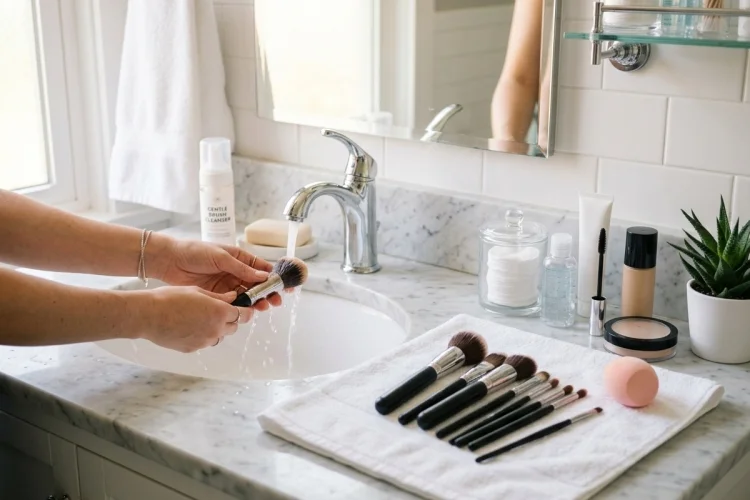
Rinse the tips under lukewarm water and gently work in a mild cleanser or shampoo. Continue rinsing until the water becomes clear, then gently squeeze away excess moisture.
After washing, lay the brushes flat on a clean towel to dry. The AAD advises against drying them upright because water can travel down toward the area connecting the bristles to the handle and weaken the glue over time.
Once they are completely dry, return them to clean storage.
3. Give Makeup Sponges Extra Attention
Makeup sponges are brilliant for blending foundation and concealer, but their absorbent structure means cleanliness deserves extra attention.
A damp sponge combined with foundation residue can create an unpleasant environment if it is continuously placed inside a closed makeup bag without being properly cleaned and dried.
Cleveland Clinic notes that sponges absorb makeup and moisture, which means regular cleaning is particularly important.
After using your sponge, wash it thoroughly with gentle soap and warm water. Keep squeezing and rinsing until obvious makeup residue has been removed.
Then place it somewhere clean with enough airflow to dry completely.
Avoid immediately sealing a wet sponge inside an airtight container unless the container is specifically designed to provide ventilation.
When the sponge begins tearing, permanently staining, losing its shape, or developing an unusual smell, replacing it is generally more sensible than trying to extend its life forever.
4. Stop Sharing Personal Makeup Products
Sharing lipstick with your best friend may seem harmless. Sharing mascara before a night out might seem even more convenient.
From a hygiene perspective, however, sharing cosmetics is something worth avoiding.
The FDA specifically advises consumers not to share makeup because microorganisms can be transferred between users. This warning is particularly important for cosmetics used around the eyes.
The same principle applies to makeup brushes and applicators.
The AAD recommends making sure you are the only person using your brushes, noting that shared makeup and applicators can transfer oil, dead skin cells, bacteria, and potentially contagious conditions such as pink eye or cold sores.
If you are doing someone else’s makeup, disposable applicators and hygienic product-dispensing techniques become much more important.
Your everyday personal makeup kit should ideally stay personal.
5. Be Careful With Mascara and Eye Makeup
The eye area deserves some of the strictest hygiene rules in your makeup routine.
Mascara is particularly interesting because the applicator repeatedly enters the tube after touching your eyelashes. Over time, this repeated use can increase opportunities for contamination.
The FDA notes that manufacturers commonly recommend replacing mascara within roughly two to four months after purchase, while its dedicated cosmetic shelf-life guidance cites a three-month recommendation from some industry experts.
If mascara becomes dry, throw it away.
Do not add water to make it usable again, and definitely do not use saliva. The FDA warns that doing so can introduce microorganisms and may also dilute preservatives designed to control microbial growth.
If you develop an eye infection, stop using eye-area cosmetics and seek appropriate medical advice. The FDA also recommends discarding eye cosmetics you were using when the infection developed.
That half-used mascara is not worth risking your eyes for.
6. Pay Attention to Makeup Expiration and Product Changes
Unlike food, makeup does not always come with an obvious expiration date.
In the United States, cosmetics manufacturers generally are not legally required to print expiration dates on cosmetic labels. Manufacturers are responsible for determining appropriate product shelf life.
That means you need to pay attention to the product itself.
Changes in smell, color, consistency, or performance can be signs that a cosmetic should no longer be used. The FDA recommends throwing away cosmetics when their color or smell changes.
One practical habit is to write the opening date on a small label or directly on the packaging.
For example, if you open a mascara in August, mark “Opened Aug” somewhere discreet. You will not have to rely on your memory several months later.
You should also follow any Period After Opening symbol on the packaging, such as 6M, 12M, or 24M, when provided by the manufacturer.
7. Keep Fingers Out of Product Jars When Possible
Packaging can influence how easily a cosmetic becomes contaminated.
A pump bottle generally allows you to dispense foundation without directly touching the product inside. A pot of cream concealer, on the other hand, may require repeated contact with your fingers or tools.
The FDA notes that dipping fingers into cosmetics can introduce microorganisms such as bacteria and fungi.
That does not mean jar packaging is automatically unsafe.
Simply use clean hands or a clean cosmetic spatula when removing product. Avoid repeatedly dipping a dirty brush directly into the container after the brush has touched your skin.
You can also place a small amount of cream product onto a clean palette before applying it.
This technique is especially useful if you frequently apply makeup to other people.
8. Store Cosmetics Somewhere Clean and Appropriate
Where you keep your makeup matters too.
Leaving cosmetics inside a hot car, in direct sunlight, or constantly exposed to excessive heat and humidity can affect the product.
The FDA advises consumers to store cosmetics appropriately because high temperatures can contribute to the breakdown of preservatives and may encourage microorganisms to grow faster.
Keep containers tightly closed when they are not being used.
Clean foundation residue from bottle caps and wipe obvious product buildup from packaging. Brushes stored openly should also be kept away from obvious sources of dust and moisture.
A makeup organizer does not need to look Instagram-perfect.
It simply needs to be clean, dry, reasonably organized, and easy enough to maintain that you actually keep using it.
9. Clean Your Makeup Bag and Storage Area
People often clean their makeup brushes but completely forget about the bag holding those freshly washed tools.
Makeup bags can collect broken powder, foundation residue, pencil shavings, dust, and product leakage. Putting clean brushes straight back into a dirty bag defeats part of the purpose.
Every few weeks, empty your makeup bag completely.
Remove old tissues, disposable applicators, empty packaging, and products you no longer use. Wash or wipe the bag according to its material and allow it to dry before returning your cosmetics.
Use this opportunity to inspect your makeup collection too.
Check whether anything smells unusual, has changed texture, has damaged packaging, or has been sitting unused for far longer than expected.
A five-minute cleanout can quickly turn a chaotic beauty drawer into a much more hygienic setup.
10. Create a Simple Hygiene Schedule You Can Maintain
The best hygiene routine is not the most complicated one. It is the one you can actually follow consistently.
Choose one day each week to check your frequently used brushes and sponges. You might make Sunday evening your regular cleaning time and leave the tools drying overnight.
Once a month, go through your cosmetic bag, sharpen pencils when appropriate, wipe packaging, and check older products.
You can also keep a simple note on your phone recording when you opened products with shorter usable periods, particularly mascara.
These habits eventually become automatic.
You will spend less time wondering when you last washed a foundation brush or how long that mascara has been sitting in your drawer.
Clean makeup habits are mostly about consistency rather than perfection.
Learning how to keep your makeup routine clean and hygienic does not require turning your bedroom into a professional makeup studio.
Simple habits make the biggest difference: wash your hands, clean brushes and sponges regularly, avoid sharing cosmetics, keep packaging clean, and store your products properly.
Pay extra attention to eye makeup, especially mascara, and never try to revive dried products by adding water or saliva. Watch for changes in smell, color, or texture, and discard questionable cosmetics instead of trying to squeeze out one final application.
Start by choosing one regular day for cleaning your most-used makeup tools. Then check your makeup bag for products you have forgotten about.
A cleaner beauty routine takes only a little extra effort-and once it becomes a habit, keeping your makeup collection organized and hygienic feels surprisingly easy.